
Trouble in Paradise: The Toxic Relationship Between France and New Caledonia
By. Zachary Veloz
DOI. 10.57912/31386889
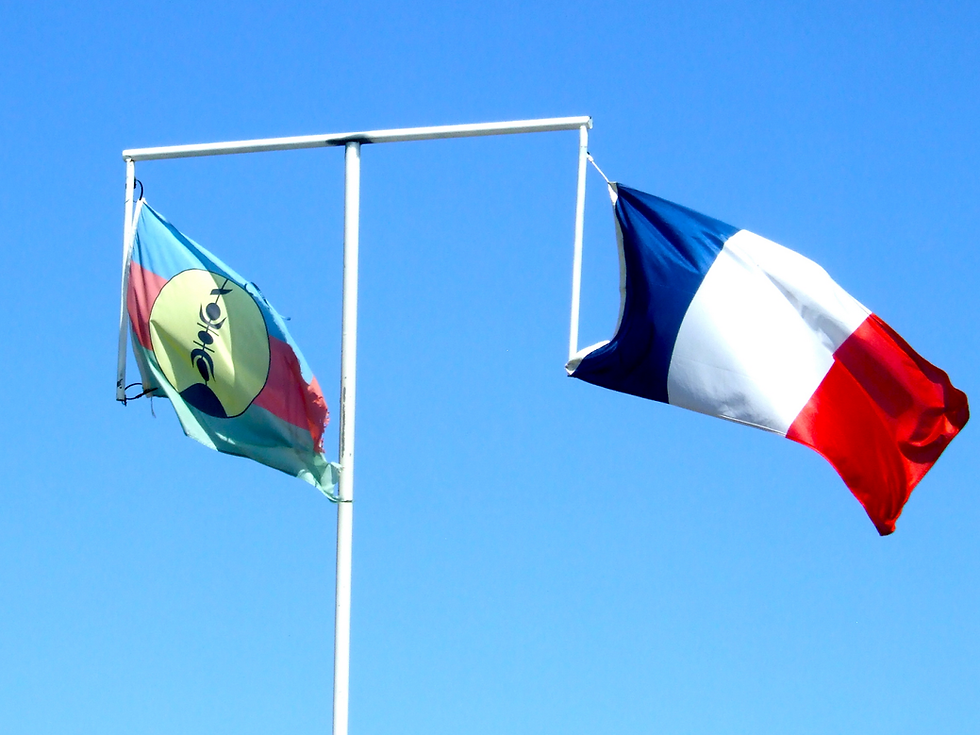
In August 2025, the Bougival Accords, a previously agreed-upon deal between France and New Caledonia, collapsed with an unclear future between the two parties moving forward. The breakdown occurred in large part because the Socialist National Liberation Front (FLNKS), an alliance of pro-independence parties, refused to accept the exclusion of one factor: another referendum for independence. Members of the New Caledonian political bureau claim the FLNKS would not allow the bill to be “forced through” as a sign of French domination.
This rejection reflects a growing movement for greater autonomy and eventual independence from France amongst the indigenous New Caledonians, the Kanak, who make up around 41.2% of the population (according to a 2019 census). The French have been disgruntled by the lack of agreement on the New Caledonian side, with Minister Manuel Valls traveling to the island, believing there will be regret in rejecting the agreement. The Accords have now stagnated, with nothing able to be done without the participation of the native New Caledonians or Kanak people, including the FLNKS. Ultimately, the island’s strategic value makes it unlikely that France will give up the territory in the near future. A realistic diplomatic solution would require compromise; one in which France grants slightly more concessions than the Bougival Accord, while New Caledonia recognizes the unlikelyhood of independence in the immediate future.
New Caledonia, an island in the Pacific with a population of 297,020 people, stands as a relic of French colonialism. Since 1853, it has been under French control, yet following WWII, rights for New Caledonia have been gradually granted. For example, the Matignon Accords in 1988 granted special autonomy to the island. French devolution of power culminated in the 1998 Noumea Accords, which transferred power to local authorities and granted New Caledonia semi-autonomous status. Most importantly, the New Caledonians were promised three different referendums on independence by France for 2018, 2020, and 2021.
The Bougival Accords of 2025 marked another potential step toward autonomy for New Caledonia. According to the 13-page agreement, the state of New Caledonia would have been created, remaining a part of France, however, with much greater powers than other French overseas territories. These additional powers include the ability to pursue an independent foreign policy, “fundamental laws” that act as a new constitution, and the ability to vote for independent powers of security, currency, and justice. Additionally, New Caledonians are to be recognized as a nationality, with citizens receiving dual citizenship.
Since the rejection of the Bougival Accords, the FLNKS have instead proposed the Kanaky agreement. The agreement would likely include full New Caledonian control over internal governance, economic self-management, and international recognition. Crucially, the agreement would include another referendum for independence.
Ultimately, the main goal of the Kanaky agreement is to provide a clear pathway to independence. However, the desire that many Kanakies have for independence will remain a distant dream as the French are determined not to let the island go. The island holds many crucial elements that greatly benefit France on the global stage. New Caledonia provides large reserves of nickel across the globe, an essential resource for electric car batteries. These reserves establish France as a leading exporter, amassing large amounts of money, especially amid discussions of transitioning to cleaner energy. A loss of these resources from New Caledonian independence would result in a substantial revenue loss for Paris, and a major blow to Macron’s ambitions to compete with China in manufacturing electric vehicles.
Moreover, France considers New Caledonia and its other overseas territories as French in a similar manner to Corsica and Brittany. Losing New Caledonia would be a huge blow to French pride, much like Algeria was in the 1960s, and would reopen questions on French decolonization and identity that were previously believed to be settled.
More importantly, the island serves as a gateway into the Indo-Pacific region. With a strong geopolitical shift toward the Indo-Pacific, New Caledonia consolidates France as a prominent figure. The growing foreign influence from China has been a particular concern for French ambitions. Macron, upon ascending to the presidency, underlined his goal of protecting French interests from the Sino-U.S. rivalry with New Caledonia as the launching point. With Macron desiring a world order based on cooperation, multilateralism, and international law, the bipolarity in Southeast Asia and the Pacific between the U.S. and China is a challenge he is trying to overcome.
Ties with nations such as Vietnam and Indonesia have strengthened to promote French interests amid Chinese aggression. France has been at the center of many projects of the region, such as the Kiwi Initiative beginning in 2020, and with many economic projects occurring with Indo-Pacific states, France wants to ensure its involvement and act as a third actor that could rival U.S.-Sino relations. With the Indo-Pacific comprising 35% of global wealth, France must focus on the region to strengthen its multilateral vision globally. Without the hub of New Caledonia, it becomes significantly harder to achieve France’s ambitions in the region, and could lead New Caledonia to fall under a sphere of influence.
Macron is aware of New Caledonia's significance and has done much to avoid potential secession. He refuses to give the New Caledonians another referendum, claiming the 2021 referendum, despite its contentiousness, is final. In 2021, violence in New Caledonia forced Macron to declare a state of emergency on the island while detaining activists. More recently, in 2024, he attempted to introduce reforms granting voting rights to people who had lived in the territories for 10 years. This comes on the back of a mass exodus of French nationals to New Caledonia: since 1998, more than 40,000 French nationals have migrated to New Caledonia. It once again led to mass riots across the territory that the French were forced to extinguish.
Ultimately, France won’t give up New Caledonia in the near future, as it serves as a critical avenue for navigating the Indo-Pacific. Additionally, the Kanaky agreement has had difficulties gaining support internally, with pro-remain groups and moderate independence parties (who broke away from FLNKS) adamantly detesting the proposal. The New Caledonian economy is currently very weak after a series of riots and protests, with the financial and economic aid from France necessary, including one in the Accords to restart its nickel processing capabilities.
As an immediate measure for the stagnation, the New Caledonian government should abide by the French request to hold a referendum in March on whether New Caledonia should accept the Bougival Accord or formulate a new accord. A referendum appears to be one of the more diplomatic options given the current circumstances. Additionally, France should consider a gradual devolution of power to New Caledonia, transforming the island’s status similar to the status of the Cook Islands in regard to New Zealand. Alternatively, the French could renegotiate the Bougival Accord to include a referendum on independence within 20 years, addressing a major concern for the FLNKS. If France wants to maintain its influence in the Indo-Pacific, it should pursue expanded security and sustainable energy initiatives with smaller Pacific islands, with the hub in New Caledonia. Regardless of the outcome, New Caledonian policies, economics, and culture will see a shift that prioritizes the local Kanaky people as opposed to the Frenchmen who moved into the region.



Comments